


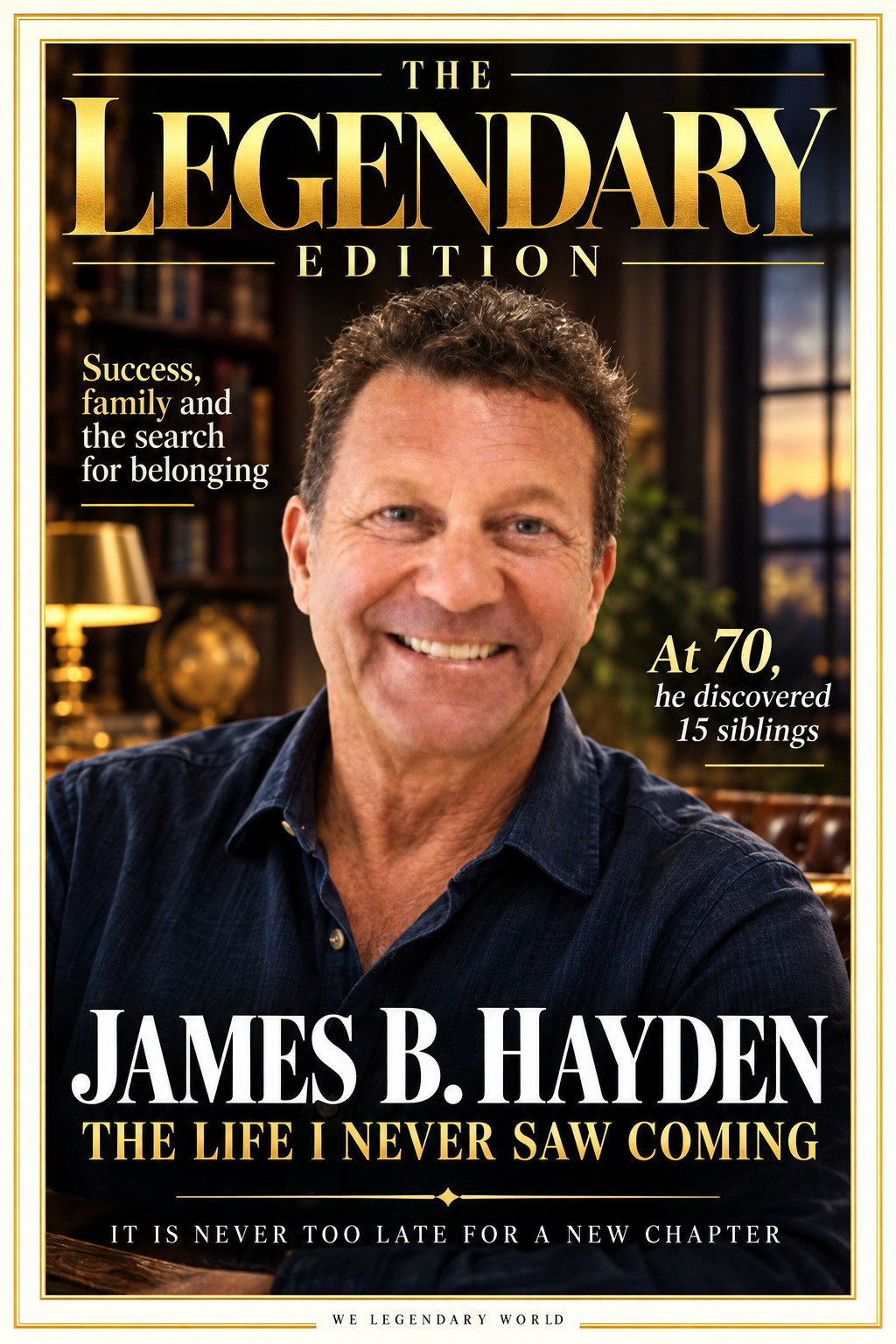
James Hayden was told he would never be as successful because he wasn’t blood. Decades later, after an extraordinary career and the discovery of 15 siblings at 70, he understands that rejection very differently.
By Rocky Valente
Founder, We Legendary World
There are people you interview.
And then there are people you recognize.
James B. Hayden was the second kind.
Before we sat down for this conversation, I knew the professional story.
GTM strategist. Market builder. Advisor. Author. A man whose career has been spent entering complicated situations, understanding why companies are stuck, and helping them move again.
His professional world is strategy, growth, sales and transformation.
He has worked with companies internationally. He worked at Microsoft. He advised more than 80 New Zealand companies over a three-year period as they expanded globally.
His professional biography can give you numbers, companies, markets and accomplishments.
But approximately five minutes into this conversation, I stopped being interested in the résumé.
Because I realized that the most extraordinary thing about James Hayden isn’t what he built.
It is what built him.
So I asked him the simplest question I could think of.
Who are you?
One word.
James thought about it.
“Spectacular.”
I laughed.
Of course I did.
Then came another answer.
A student.
At 72 years old, after decades of business, success, mistakes, reinvention and experiences most people could turn into several lifetimes, James Hayden still considers himself a student.
He believes in learning.
He believes in changing.
He believes in adapting.
In fact, one of the philosophies attached to his work is brutally simple:
Adapt or Die.
The more we talked, the more I understood that this wasn’t simply a business philosophy.
James has been adapting his entire life.
THE BOY WHO WASN’T BLOOD
James was adopted at birth.
For many people, that sentence would simply be biographical information.
For James, it became a question that followed him through much of his life:
Who am I?
Where did I come from?
Where do I belong?
Growing up adopted created insecurities he now speaks about openly.
He wanted to be like everyone else.
He wanted to fit.
At times, he says, that desire turned him into too much of a people pleaser.
And then, when he was around seven years old, someone gave that insecurity words.
James was sitting at dinner when his grandmother turned her chair toward him.
She looked directly at this seven-year-old boy and told him something no child should have to hear.
He needed to accept his lot in life.
He would never be as successful as his cousins.
Why?
Because he wasn’t blood.
Imagine being seven years old and hearing that.
Imagine carrying those words into school.
Into adolescence.
Into your first job.
Into every room where you secretly wonder whether you deserve to be there.
Into success.
Into failure.
Into adulthood.
When James told me the story, I asked him something that might initially sound strange.
Wasn’t that perhaps the best thing she could have told you?
James understood exactly what I meant.
Because his answer was immediate.
It gave him fire.
And there, for me, was the story.
Rejected.
Then came the fire.
REJECTION DIDN’T BEGIN AT SEVEN
Years later, when James met his biological mother, he learned something even more difficult.
His biological mother and maternal grandmother had attempted to end the pregnancy using a substance they believed would cause an abortion.
It didn’t.
James survived.
And more than seven decades later, there he was in front of me.
Laughing.
Working.
Learning.
Creating.
Advising.
Loving.
Finding family.
Still curious.
Still building.
Still here.
What fascinated me was the absence of bitterness in the way he told me.
James doesn’t pretend there was no rejection.
There was.
But he also sees something else.
Resilience.
Something survived.
Then something grew.
And his story did not end with the people who rejected him.
Because another woman entered it.
His mother.
The woman who raised him.
During our conversation, I called her his heart mom.
I like that expression.
Because biology can explain where our bodies come from.
It cannot always explain where love comes from.
James’s heart mom gave him something completely different.
She practiced affirmations with him.
She was a real-estate broker and took him to real-estate investment classes while he was still young.
She exposed him to thinkers and speakers including Jim Rohn and Zig Ziglar.
Where one voice had told him what he would never become, another showed him what might be possible.
That matters.
We spend far too much time trying to force human lives into simple categories.
Good childhood.
Bad childhood.
Good family.
Bad family.
Success.
Failure.
Victim.
Winner.
Real life isn’t that clean.
One person can wound us.
Another can teach us to dream.
Sometimes the wound and the lesson exist simultaneously.
And eventually we have to decide what we build from both.
THEN, AT 70, EVERYTHING CHANGED
This was the moment in our conversation when I genuinely thought I had misunderstood James.
He told me he had discovered 15 siblings at 70.
I stopped him.
Seventeen?
“No. Seventy. Seven-zero.”
Absolutely not.
I informed him that his mathematics were clearly incorrect because the man sitting in front of me looked about 50.
James assured me he was 72.
I accused him of lying.
He joked about putting his skincare and fitness routine on his website.
And somewhere between laughing about his age and me refusing to believe him was something extraordinary.
Think about what he had just told me.
James grew up an only child.
And at an age when society often behaves as though life’s major discoveries are behind us, his family suddenly became enormous.
Fifteen siblings.
At 70.
Most of us imagine life as a line.
Childhood.
Career.
Family.
Retirement.
The end.
James’s life apparently refused the assignment.
At 70, it went:
Boom.
New family.
New identities.
New relationships.
New questions.
New answers.
A completely different understanding of where he came from.
THE SISTER WHO MAY HAVE WALKED PAST HIM 50 TIMES
And then there is Dawni Rae.
This part of the story is almost too perfect to write.
When James was a little boy, he wanted a younger sister.
His mother told him to pray for one.
So he did.
Nothing happened.
Or so he thought.
Perhaps the answer simply arrived about 65 years late.
Because eventually James discovered Dawni Rae.
His sister.
But here is where life becomes almost cinematic.
When James worked at Microsoft, he trained at Pro Sports Club, now Bay Club.
Dawni Rae still works there as a trainer.
She has worked at the club for 28 years.
They had existed close to one another without knowing what they were to each other.
James estimates that they may have walked past one another 50 times.
Brother.
Sister.
Strangers.
Imagine that.
Someone you’ve wondered about your entire life may have already passed you on the street.
Maybe you stood behind them ordering coffee.
Maybe your cars stopped beside each other at a traffic light.
Maybe you smiled.
Maybe you didn’t.
Maybe life knew.
You didn’t.
And then one day:
Now.
Now you get to know.
James told me that discovering his family changed the way he sees the world.
I believe him.
How could it not?
BEFORE MICROSOFT, THERE WAS A BOY AND A DOG IN ALASKA
Long before boardrooms and global companies, there was a little boy in a remote Native village in Alaska.
James’s father had learned radar during World War II, and the family eventually moved north.
The village was remote.
No roads connected it to the outside.
You arrived by boat or plane.
James had a best friend there.
Not another child.
A Siberian Husky.
His name was Poochie Shiny.
James and Poochie did everything together.
One spring, when James was about five years old, he noticed something happening to the frozen river.
The ice was beginning to break.
He went and told someone.
Soon the village gathered at the river.
Winter was ending.
Spring was arriving.
For the adults, this was much more than cracking ice.
It was survival.
Renewal.
Another season beginning.
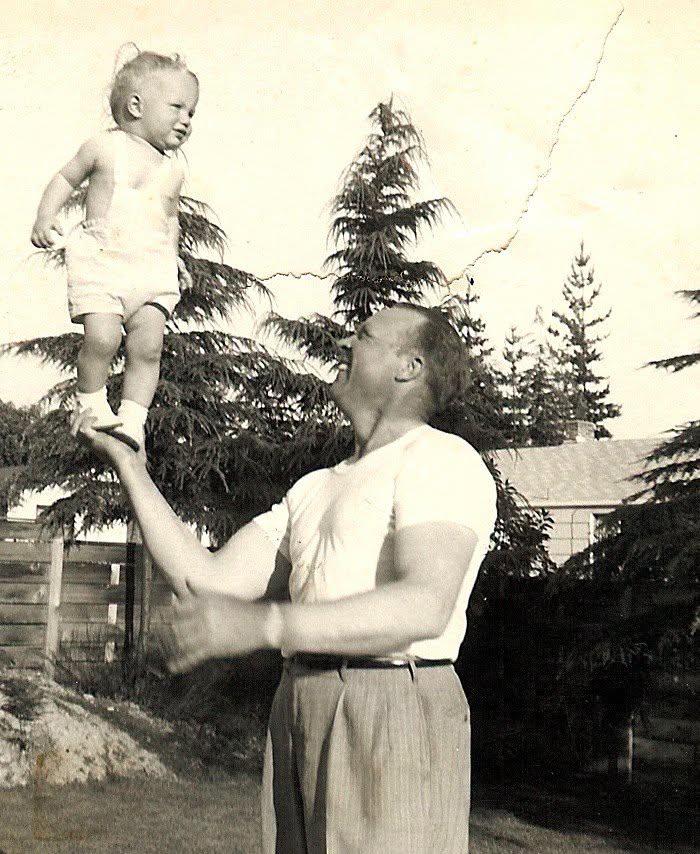
James remembers a celebration in which people gathered around a large rug or blanket and tossed people into the air.
Because little James had spotted the changing river, he became part of the celebration.
Up he went.
And then Poochie Shiny went too.
A five-year-old boy and his dog flying through the Alaskan air while an entire village celebrated the return of spring.
I cannot get that image out of my mind.
Because perhaps James Hayden’s life has always been about watching the ice break.
Something appears frozen.
Permanent.
Finished.
And then:
Crack.
Movement.
Water.
Life.
A new season.
At five.
At forty.
At seventy.
THE MAN WHO CHASED SUCCESS
James entered his professional life during the era of Wall Street and Gordon Gekko.
The image of success was powerful.
Perfect.
Aggressive.
Certain.
The man with the answers.
James laughs today about having naturally wavy hair and slicking it back because he wanted the Gordon Gekko look.
It is funny.
It is also incredibly human.
Because how many of us spend the first half of our lives trying to look like somebody else’s definition of success?
Different hairstyle.
Different house.
Different title.
Different bank balance.
Different body.
Different life.
James now talks to his daughters and family about something much more interesting:
finding your own voice.
That voice changes throughout our lives.
And maturity, perhaps, is when we stop trying to become somebody else long enough to discover who was underneath the performance.
During our conversation, I told him something I deeply believe.
We need to find our own success.
Not live somebody else’s.
High achievers can spend decades chasing a dream without stopping to ask whether it is actually theirs.
Then something terrible happens.
They get it.
And it still doesn’t feel right.
Because achieving someone else’s dream doesn’t magically make it yours.
AFTER SUCCESS, WHAT IS LEFT?
James enjoys making money.
Good.
So do I.
This isn’t one of those stories where we pretend money doesn’t matter because that sounds spiritual.
Money matters.
Being compensated for value matters.
But James introduced another kind of income during our conversation.
Psychic income.
The return we receive from doing something meaningful even when nobody pays us for it.
When James looks back, some of the stories that give him the greatest satisfaction are not simply the deals.
They are people.
Moments when something he did affected another person’s life.
And I particularly loved the language he used.
He doesn’t say:
“I changed their life.”
He says:
I opened a door.
They walked through it.
That distinction is everything.
We cannot live another person’s life for them.
We cannot heal them for them.
We cannot walk through the door for them.
But sometimes we can show them a door they didn’t know existed.
And sometimes that is enough.
THE GOOD SELFISH PLEASURE OF GIVING
At some point, James and I realized we share another philosophy.
Helping people feels good.
Service gives us something back.
Does that make giving selfish?
Maybe.
Wonderful.
I call it:
The good selfish pleasure of giving.
If helping another human being makes you feel fantastic, please become addicted to that feeling.
Open doors.
Introduce people.
Teach someone.
Pay for someone’s coffee.
Tell someone what they are capable of when they cannot see it themselves.
James told a story about paying for another person’s coffee.
When she wanted to know how she could repay him, the answer was essentially simple:
Do it for somebody else.
That is impact.
It doesn’t require a billion dollars.
It doesn’t require a foundation.
Sometimes it requires the price of a coffee and ten seconds of humanity.
“THAT’S A LIFE WORTH LIVING.”
Then James said something that, for me, changed the entire meaning of the interview.
If his story can reach one person who is experiencing trauma…
If that person can look at James, at his sister Dawni Rae, at people who have lived through rejection, insecurity and difficult chapters…
And understand that there can be another side…
If someone who feels hopeless can discover even a little hope…
Then James said:
“That’s a life worth living.”
There it is.
That is James Hayden.
Not the résumé.
Not Microsoft.
Not the companies.
Not the revenue.
Not the impressive biography.
A man who once wondered whether he belonged now wants someone else to know that they can make it through.
And perhaps that is why rejection became fire instead of ashes.
WHAT WOULD YOU TELL THE LITTLE BOY?
Near the end of the conversation, I asked James one of my favorite questions.
What would you tell your younger self?
His answer wasn’t what I expected.
He wouldn’t erase much.
Even the difficult parts.
Because the painful experiences helped create the man he is today.
And today James says something enormously important:
He is at peace with who he is.
Not perfect.
At peace.
There is a difference.
There was one thing, however, that he would change.
Fear.
He spent too much time worrying.
Too much energy afraid of things that never happened.
Today his internal message is much simpler:
I’ve been through this before. I’ll figure it out.
Read that again.
Not:
Nothing bad will happen.
Not:
Everything will be perfect.
Not:
I control the universe.
Simply:
I’ve been through this before. I’ll figure it out.
Maybe that is what resilience actually sounds like.
REJECTED. THEN CAME THE FIRE.
A biological family that initially did not want him.
A grandmother who told him he would never equal the children who shared her blood.
A boy wondering where he belonged.
An only child praying for a sister.
A young man trying to wear someone else’s image of success.
A businessman building, learning, failing, adapting and building again.
And then…
At 70…
Fifteen siblings.
A sister who may have passed him dozens of times without either knowing.
A completely new chapter.
At 72, James Hayden still calls himself a student.
I think that’s the part I love most.
Because we have created a culture obsessed with arrival.
Become successful.
Become healed.
Become rich.
Become famous.
Become enlightened.
Become something.
And then what?
James’s life reminds me that perhaps there is no arrival.
There is another river.
Another winter.
Another crack in the ice.
Another person.
Another lesson.
Another door.
Another version of ourselves waiting to be discovered.
Sometimes rejection is rejection.
It hurts.
We should never romanticize cruelty simply because somebody survived it.
But survival gives us a choice about what happens next.
James took the words meant to diminish him and turned them into fire.
Then, eventually, he discovered something even more powerful than proving anyone wrong.
He discovered that he didn’t need to.
He knows who he is.
He knows where he came from.
He knows he belongs.
And now he can use the life he built to open doors for somebody else.
That is why I wanted to tell this story.
Not because James Hayden succeeded despite being rejected.
But because after all the success, all the business and all the years…
he discovered that the question underneath everything was never:
How successful can I become?
It was:
Where do I belong?
And perhaps the most beautiful part of this story is that life eventually answered him.
You belong.
You always did.
Website: jamesbhayden.com
YouTube: @jamesbhayden
Podcast: Adapt or Die — available on Spotify, Apple Podcasts and iHeart
Book: Real World Selling Strategies — available on Amazon
We Legendary World
If you don’t have a stage, create one.
https://linktr.ee/welegendary.world
