


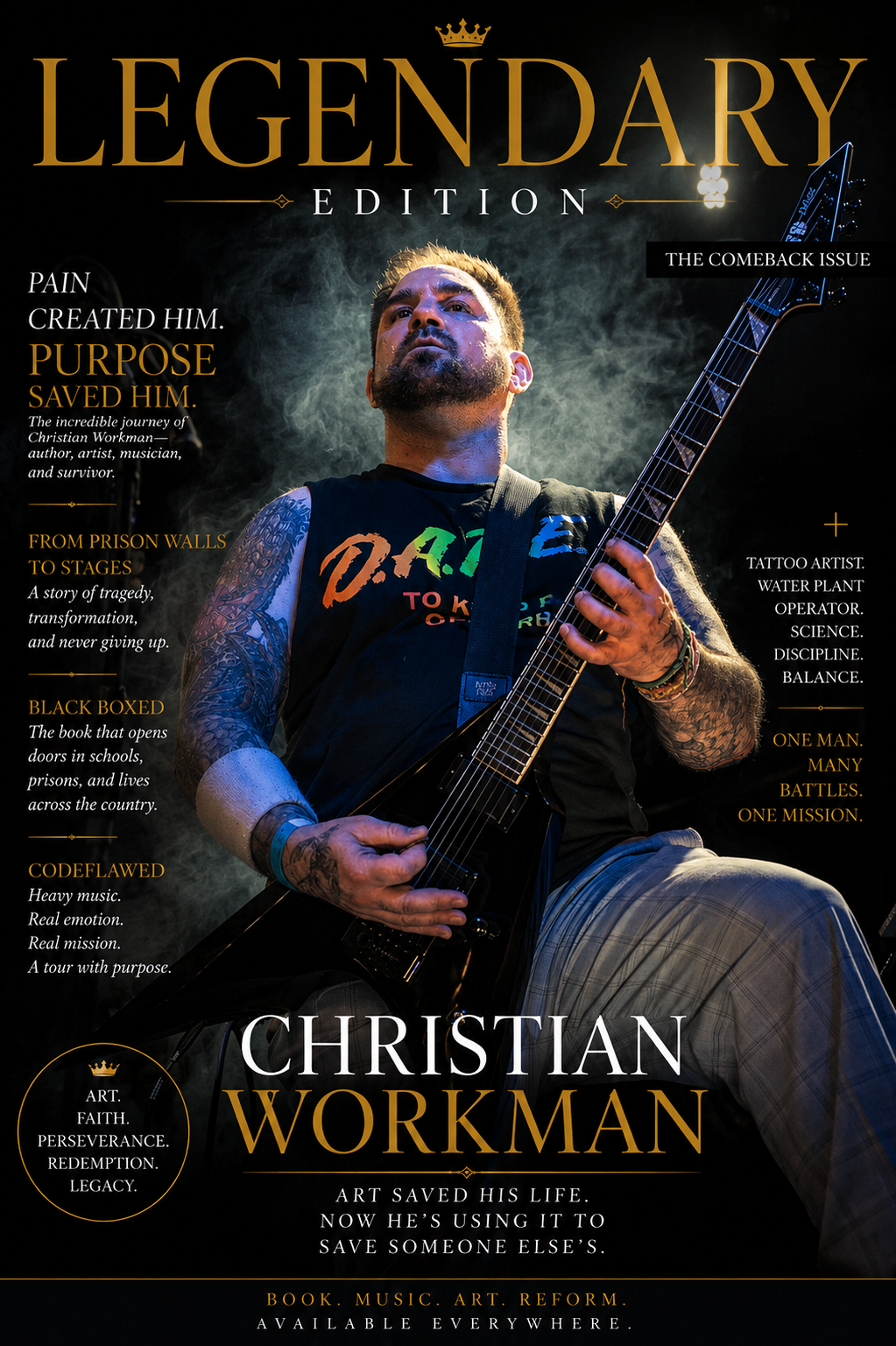
How One Survivor Is Using Heavy Metal, Literature, and Faith to Break Cycles of Destruction
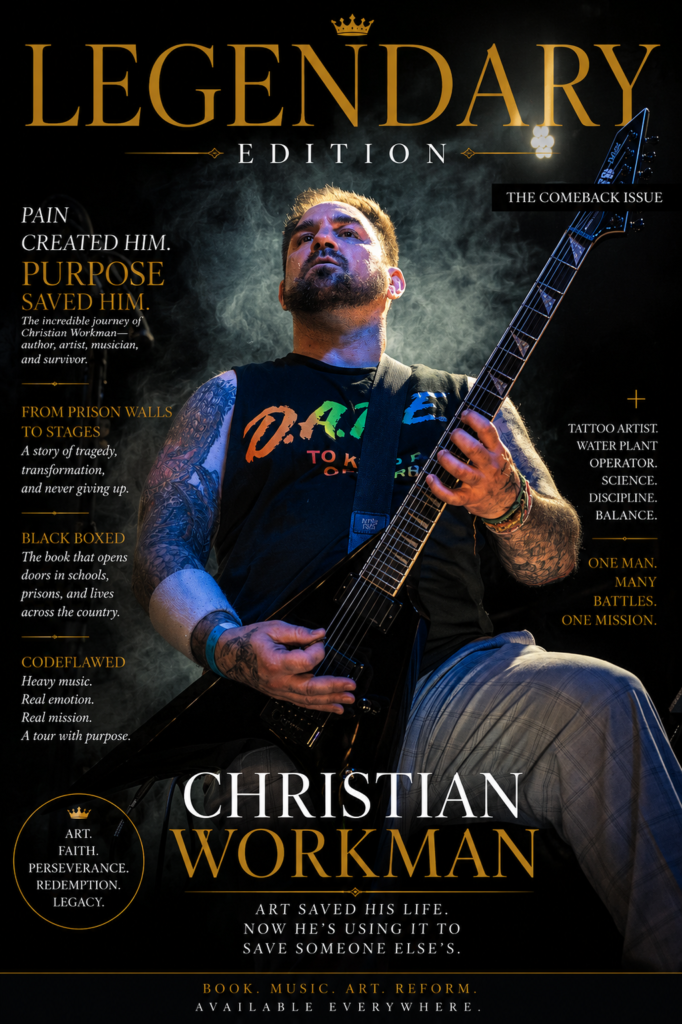
There are people who create art because they want attention.
And then there are people who create art because it kept them alive.
For Christian Workman, music was never simply entertainment. Writing was never just creativity. Art became survival long before it became identity.
Born in Denver, Colorado in 1982, his life would eventually become a collision between pain and purpose — prison walls and guitars, trauma and transformation, chaos and redemption. Today, he stands at the intersection of multiple worlds: published author, licensed tattoo artist, certified water plant operator with a background in chemistry and biology, and frontman of the rising heavy metal band Codeflawed.
But beneath every title is a deeper mission:
To prove that adversity does not have to become destiny.
His story is not polished perfection. It is not the fantasy version of reinvention often sold online. It is raw, scarred, and deeply human. And maybe that is exactly why people are listening.
Because Christian Workman speaks to the people who feel forgotten.
The ones who have lost friends.
The ones who have made mistakes.
The ones who have stared at walls wondering whether life would ever give them another chance.
And somehow, through everything, he kept going.
That perseverance became the foundation of his first published book, Black Boxed: Coming of Age Behind Prison Walls, a deeply personal account rooted in the aftermath of tragedy, incarceration, and the emotional destruction that followed the alcohol-related car accident that claimed the lives of his friends shortly after high school.
The title alone feels heavy.
The content inside hits even harder.
But instead of allowing the experience to bury him, Christian transformed it into something that could reach others standing on the edge of hopelessness.
Now the book is beginning to move beyond traditional readership and into places where it may matter most — schools, prison systems, rehabilitation programs, and substance abuse recovery environments. Organizations are beginning to recognize the value of real stories told without filters. Not motivational clichés. Not sanitized inspiration.
Truth.
The kind of truth that can interrupt destructive cycles because it comes from someone who lived them.
And perhaps that is why audiences continue growing around his work. People can feel authenticity immediately. Especially in a world oversaturated with performance.
There is something powerful about a man openly saying:
“I survived this. I am still here. And you can survive too.”
That message extends far beyond literature.
Music became another weapon against silence.
Through Codeflawed, Christian channels emotion into aggressive soundscapes that carry both rage and resilience. The band is preparing to tour nationally while simultaneously exploring something few artists have attempted: bringing heavy metal directly into prison environments as part of conversations around reform, recidivism, recovery, and human transformation.
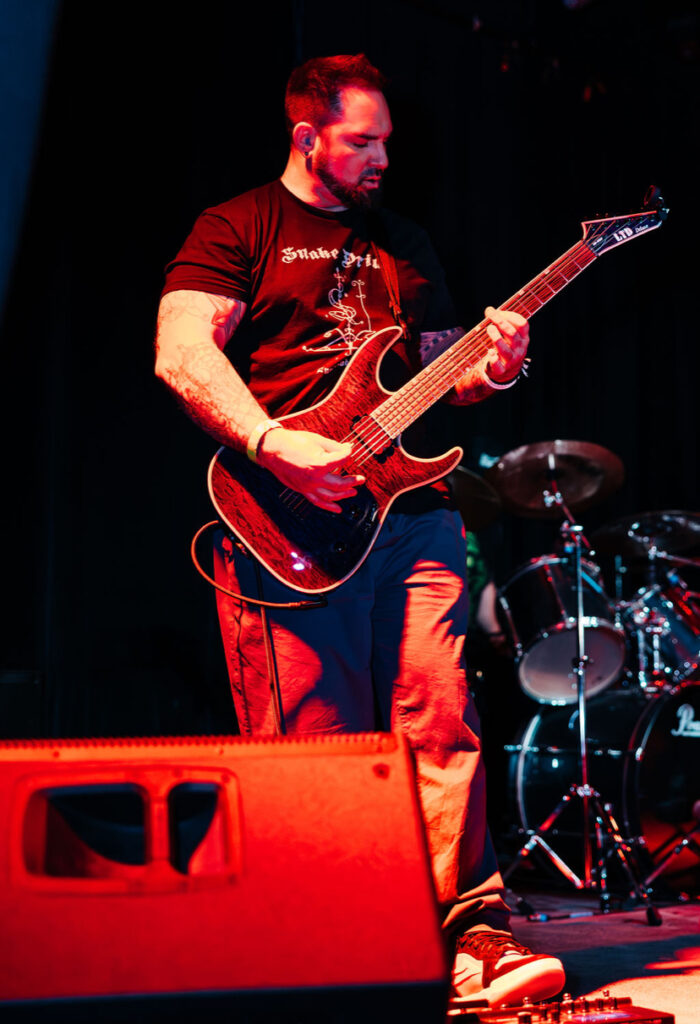
Most people never imagine a prison becoming a place for healing conversations through music.
He does.
Because he understands what it feels like to be trapped physically, emotionally, and spiritually.
He knows what hopelessness sounds like.
And he also knows what it sounds like when someone begins fighting their way back.
That duality lives inside the music. There is aggression, but there is also purpose. Chaos, but also faith. Pain, but also survival.
The mission is not simply to entertain crowds.
It is to reach people before they destroy themselves.
That same intensity follows him into every other part of life.
Outside of music and writing, Christian became a state licensed water plant operator, building a career rooted in science, chemistry, biology, and responsibility — a sharp contrast to the darkness many would assume from a metal musician covered in tattoos.
But that contradiction is exactly what makes his story compelling.
Human beings are never one-dimensional.
The same man who screams into a microphone on stage also understands water systems, chemistry structures, and biological processes. The same person who survived maximum security prison also became a licensed tattoo artist working professionally at New Addiction in downtown Denver.
Reinvention, for him, was never about pretending the past did not happen.
It was about refusing to let the past be the end.
And perhaps that is the true heartbeat behind everything he creates.
Faith.
Not necessarily in the simplistic way people often package spirituality online, but faith in movement. Faith in continuing. Faith in getting back up despite the weight of grief, trauma, guilt, or failure.
Walking forward anyway.
Even when life becomes almost unbearable.
That energy is beginning to resonate beyond underground circles. With publishing opportunities expanding, tours approaching, and growing visibility surrounding both the book and the band, momentum is building around a message society desperately needs right now:
People can evolve.
Not everyone who falls apart stays broken forever.
Some rebuild themselves louder.
Today, Black Boxed and Codeflawed are both available across major platforms, with plans to continue pushing into mainstream visibility through publishing, touring, speaking opportunities, prison reform conversations, and broader media expansion.
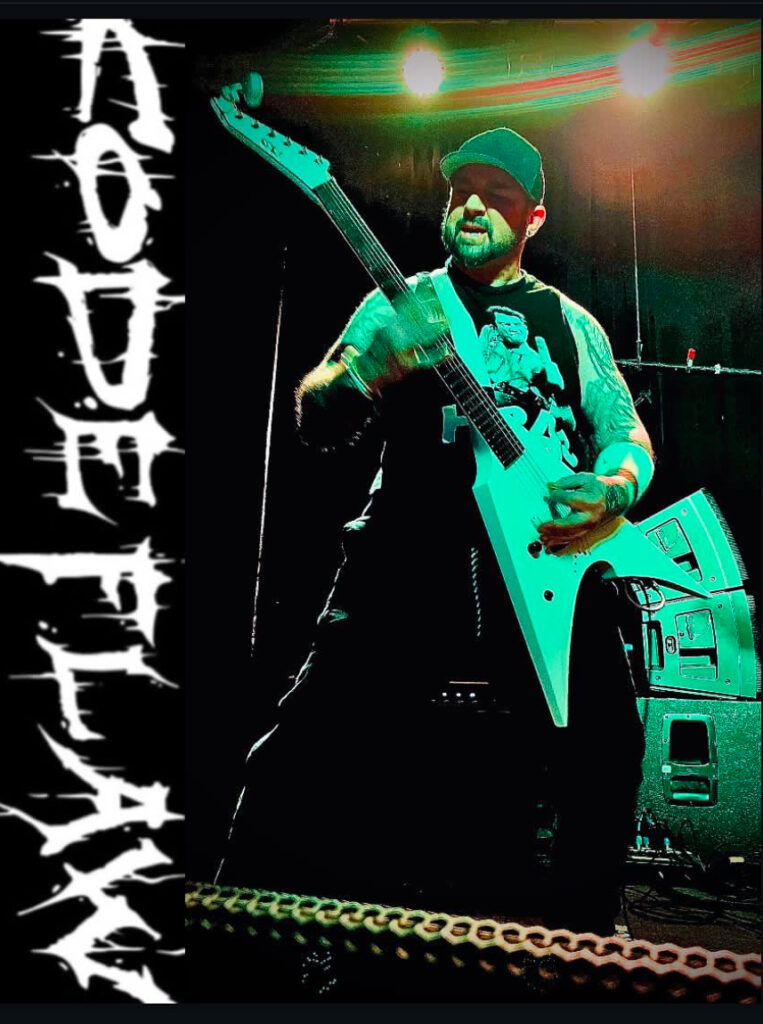
But underneath every platform, every show, every tattoo, every page, and every song is the same core truth:
Art saved Christian Workman’s life.
Now he is using it to reach others before they lose theirs.
Instagram: @the_work30
