


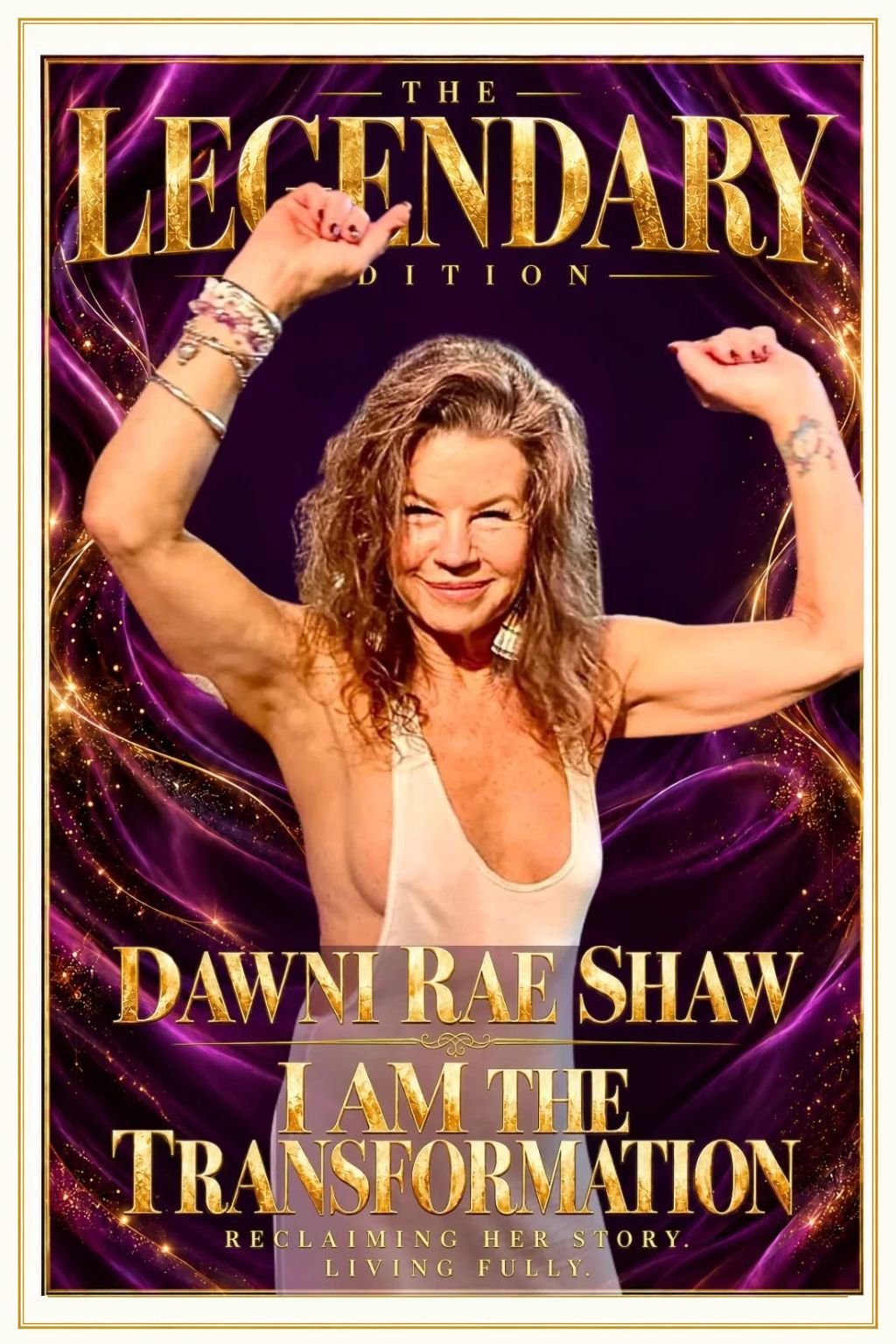
The Legendary Edition by Rocky Valente
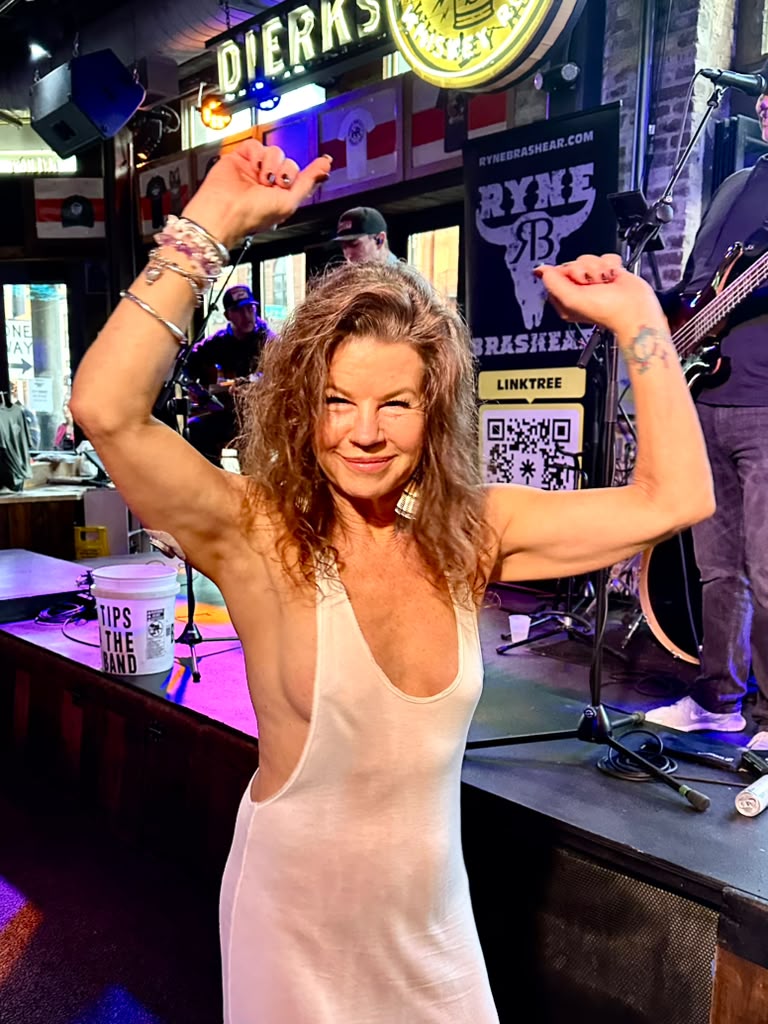
In conversation with Rocky Valente for We Legendary: The Revolution, Dawni Rae Shaw explores identity, the daily work of healing, and the joy of building a life that feels like her own.
There is a moment in Dawni Rae Shaw’s conversation with Rocky Valente when she is asked to describe herself in one phrase.
She pauses.
“I am transformation.”
The answer is brief. The life behind it is anything but.
Throughout the interview, Dawni Rae speaks about childhood instability, abuse, motherhood, movement, faith, and the continuing work of understanding herself. She also laughs. She talks about dancing, creating retreats, growing older, and the possibilities still ahead.
These parts of her belong together. Her joy is as much a part of her story as the experiences she has worked to understand.
What emerges is a portrait of a woman who takes personal growth seriously without pretending to have finished it. She remains a student, even as she teaches. She continues seeking support, even as she supports others.
For Dawni Rae, transformation is something practiced across a lifetime.
Sometimes, that practice begins with a name.
The Name That Felt Like a Second Chance
Early in the conversation, Rocky asks about the pronunciation and story of Dawni Rae’s name. What might have been a simple introduction becomes one of the interview’s most revealing passages.
Her name connects her to family members who came before her. Over time, her mother began calling her Dawni Rae, a variation that eventually felt more comfortable.
The difference carried emotional weight.
She explains that the name used during her childhood had become associated with painful experiences. Dawni Rae felt like a way forward, a name she could inhabit with more happiness.
“It felt like… a second chance.”
Yet her relationship with that earlier name has continued to evolve.
During a recent solo retreat, she recognized that distancing herself from the name had also meant distancing herself from the little girl who carried it. The discovery invited another kind of work: welcoming that younger self back into her life.
She describes a growing willingness to embrace the child she had learned to separate from.
Even after years of reflection, a familiar part of her story could reveal something new. The name that once helped her move forward was now bringing her into a deeper conversation with her past.
Learning to Adapt Before She Could Choose
Dawni Rae describes a childhood marked by frequent moves, changing households, and shifting expectations.
She remembers attending three different first-grade schools in different towns. Religious environments changed. Adult relationships changed. The sense of who she was expected to be could change with them.
Against that background, identity became a recurring question.
Who was she within all these different worlds?
Her memories contain affection and happiness alongside instability. She recalls an adult she loved, moments of freedom, and the excitement of seeing her father. She also describes the pain of his unpredictable presence and his eventual disappearance from her life for several years.
Her account resists an easy summary. Childhood could hold cherished memories and frightening experiences within the same period.
Later, she describes physical abuse in the home and sexual abuse beginning around the age of twelve. A camp mentor, someone occupying a position of trust, became an abuser.
She speaks about grooming, secrecy, and the shame she carried. Understanding the meaning of those experiences would take years.
As she tells it, learning to separate herself from what was happening helped her get through a world she could not control.
Only much later would she gain language for that response.
The Outgoing Girl With a Hidden Story
People around Dawni Rae did not necessarily see the pain she was carrying.
She describes herself as naturally outgoing and bubbly. During school, she was involved, active, and drawn toward community.
That energy was authentic. At the same time, being outwardly engaged helped her keep painful experiences hidden.
Her account makes room for both truths. The girl who encouraged others and participated enthusiastically in school life was also living with a secret.
Running became an important outlet. She discovered it in elementary school and found that she could run long distances. Cheerleading offered another place to participate, contribute, and belong.
She remembers being recognized for her inspirational spirit. Being involved suited her personality and brought her into connection with others.
Looking back, movement forms a thread through her life. Before she developed a professional approach to fitness and personal growth, she had already experienced the value of moving her body and finding community around it.
The activities mattered in their own right. They also gave her somewhere to place energy that might otherwise have remained without expression.
Finding Words at Twenty-Four
One of the most significant turning points Dawni Rae describes happened when she was twenty-four.
She remembers where she was when she recognized that experiences from her childhood had been sexual abuse. The realization was specific enough that the road and city remain part of the memory.
Naming what had happened opened a new stage of understanding.
The shame she had carried could be examined with a different perspective. Experiences she had not fully understood as a child could be reconsidered as an adult.
She identifies that period as the beginning of a deeper commitment to her healing.
Over the years, therapy helped her recognize how she had learned to dissociate from painful experiences. A response that once helped her endure childhood became something she could gradually understand.
Her willingness to speak about this process gives the interview depth. She does not present insight as an instant solution. Recognition was a beginning, followed by years of attention and work.
That continuing effort remains part of her life today.
The Teacher Who Remains a Student
Dawni Rae is clear about the importance of continuing to learn.
As a coach and retreat facilitator, she believes that helping others brings a responsibility to keep examining herself. Therapy, workshops, classes, and learning from other people remain part of that commitment.
Her approach allows experience and humility to exist together.
She can lead a room while acknowledging that she still needs places where she can be supported. She can share what has helped her while remaining open to something she has yet to understand.
She also speaks about moments when old questions of worthiness return. Even after substantial work, familiar feelings may require fresh attention.
Those moments become invitations to pause and ask what is happening.
Faith is central to how she approaches that reflection. She describes her higher power as a source of grounding when considering integrity, discernment, and decisions.
Her account of faith is personal and complex. She identifies it as a source of strength while acknowledging that people associated with religious communities were also involved in her abuse.
She holds those parts of her experience without allowing one to erase the other.
Creating the Retreat She Once Imagined
When Dawni Rae discusses her retreats, the conversation becomes especially concrete.
She describes a long-held dream of creating a place that brought together meaningful experiences from her life: moments of discovery, connection, beauty, and personal growth.
Over time, she began imagining what her own retreat would feel like. What would the environment offer? What would participants explore? What would they take home?
The root of the work, she explains, is the inner child.
Her way of describing the process follows a recurring movement: look backward, dive inward, move forward, then go upward and outward.
The sequence reflects her belief that understanding the past can inform how someone lives in the present.
She is interested in the acknowledgment that comes before letting go. What has someone been carrying? What have they learned? What still deserves attention?
For her, these questions make reflection useful. They connect insight with the choices a person makes afterward.
The retreat becomes a place to step away from habitual distractions and spend time with questions that daily life can make easy to postpone.
Move, Drop, and Write
Among the practices Dawni Rae describes is one she calls “move, drop, and write.”
Participants are offered a theme or something to consider. They move their bodies, then stop and journal.
The practice brings physical activity and reflection into the same experience. Movement creates one kind of opening; writing offers a place to explore what arises.
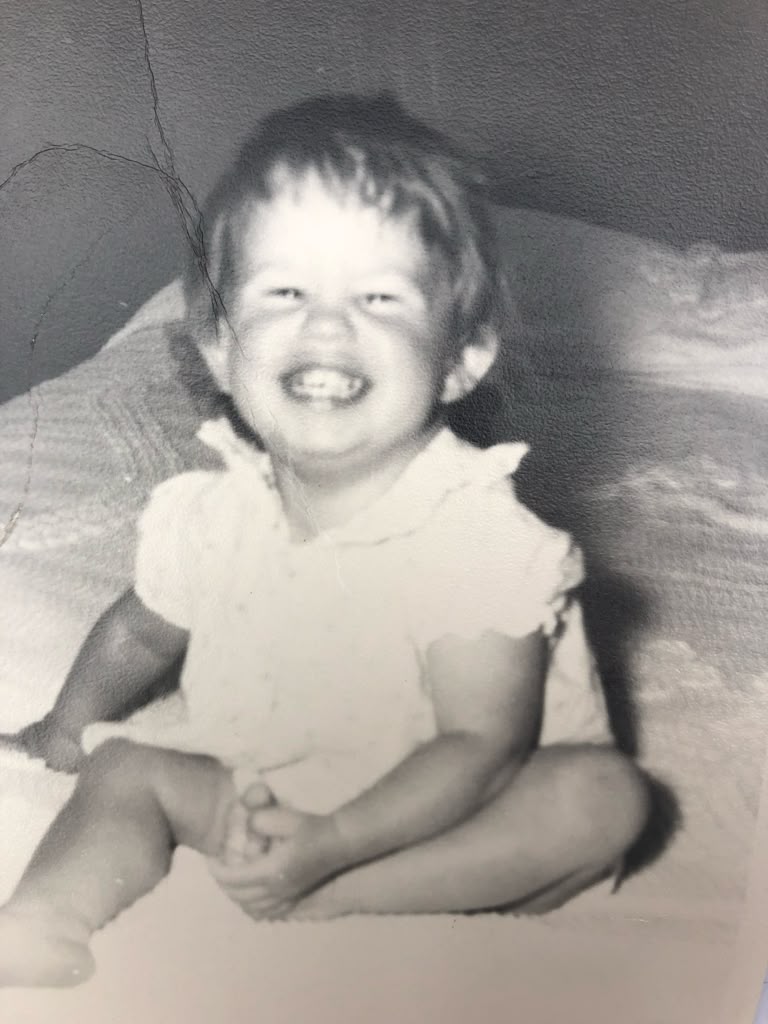
She also describes asking participants to bring a photograph of themselves as a baby or young child. That image returns throughout the retreat, helping keep the younger self present within the experience.
It is a detail that echoes her own reflections about her name.
The child in the photograph has a place in the adult’s life. Looking at that child can make an abstract conversation about identity feel immediate and personal.
Dawni Rae’s retreats also include time outdoors, dancing, and opportunities for joy. She describes them as demanding and rewarding, with activities chosen intentionally.
The picture she offers is active and engaged: people reflecting, moving, writing, and spending time together.
Joy Deserves Its Own Space
Dawni Rae’s vitality is unmistakable throughout the conversation.
She is expressive, playful, and willing to speak with enthusiasm about the things she loves. Her presence gives the interview warmth even when the subjects are difficult.
That joy deserves attention without needing to explain or justify it through her past.
She enjoys movement. She values connection. She has ideas for her work and hopes for the future. She can speak seriously about pain and still be someone who loves to dance.
Allowing all of that into the portrait matters.
A person who shares difficult experiences is still entitled to complexity, pleasure, humor, and ordinary happiness. Dawni Rae brings those qualities into the conversation herself.
They also help explain the environments she wants to create for others. Her retreats make room for effort and enjoyment because both have a place in the life she is describing.
Changing the Way She Ages
As the conversation turns toward aging, Dawni Rae offers another statement that captures her outlook:
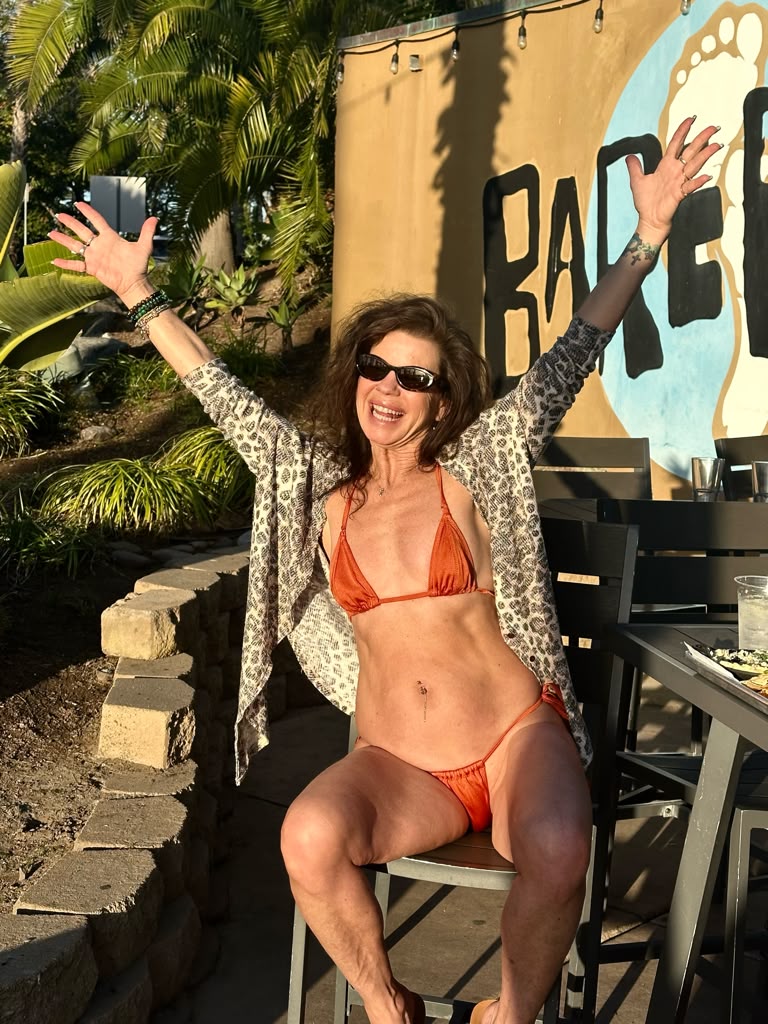
“I will not let age change me. I will change the way I age.”
She speaks about commitment and recommitment to the habits that support her daily life. Movement, strength work, rest, and managing stress are among the areas she considers important.
The emphasis is on participation: continuing to pay attention, make choices, and invest energy in how she lives.
Her perspective extends beyond appearance. She wants vitality, engagement, and the capacity to keep doing meaningful work.
Motherhood is another part of that story. She became a mother at forty-one and speaks about the intention she brought to raising her daughter, including conversations about awareness and safety.
Her experiences informed what she wanted to offer as a parent.
Across these subjects, the same concern returns: how can greater understanding influence what happens next?
Growing older continues to offer her opportunities to answer.
Freedom, Gratitude, and Her Own Meaning
Forgiveness and gratitude occupy an important place in Dawni Rae’s personal account of healing.
She recalls a period when reflecting on another person’s story helped her reconsider her own. She began to understand more clearly how the experiences of her life had influenced the work she felt called to do.
She describes that shift as deeply meaningful.
These are her words for her own experience. Their value comes from the honesty with which she shares them, including her acknowledgment that the work continues.
Her gratitude does not make the painful events less serious. It describes a relationship with her life that she has developed over time.
What she offers listeners is access to that perspective: how she has made meaning, what has helped her, and what she continues practicing.
A Future Still Being Written
Toward the end of the interview, Rocky asks Dawni Rae to imagine herself one year ahead.
What would she hope to be able to say?
Her answer is thoughtful. She wants to congratulate herself for embracing her truth and doing the hard right things. She hopes to feel pleased with her work toward wholeness.
There is no claim of completion.
Instead, she describes an intention to continue living with honesty and attention. The future remains something she will participate in creating.
That answer gives her earlier declaration its fullest meaning.
“I am transformation” contains the child she is learning to embrace, the adult who found words for what happened, the mother, the teacher, and the student who continues to learn.
It also contains a woman with more life ahead of her.
Dawni Rae Shaw is still asking questions. Still moving. Still creating spaces for connection.
And still coming home to herself.
Connect with Dawni Rae Shaw
Discover Dawni Rae’s work and learn more about her approach to personal growth through her website, Who Am I to Me.https://www.whoamitome.com/
Follow her on Instagram at @dawni.rae.
Discover We Legendary
Explore more conversations with Rocky Valente, discover inspiring stories, and connect with We Legendary: The Revolution through our official https://linktr.ee/welegendary.world
Dawni Rae Shaw in conversation with Rocky Valente for We Legendary: The Revolution.
